
Updated: July 16, 2026
Category: Technology
Summary
- CXL memory is not a replacement for HBM. It is a complementary technology that addresses capacity, sharing, and pooling bottlenecks in CPU-centric servers.
- The availability of the CXL 4.0 evaluation specification and product activity from Astera Labs and Marvell show that the ecosystem is moving from experimentation to early commercialization.
- Meaningful revenue contribution is likely to emerge gradually in memory-intensive workloads such as AI inference, recommendation systems, in-memory databases, and cloud server optimization.
(Advertisement)
Introduction: Why CXL Memory Matters Again
CXL memory remains one of the most important candidates for the next standard in server memory expansion. In 2023, the key idea was that CXL could help solve the memory wall by creating a new interface between processors, accelerators, and memory devices. In 2026, the question has become more practical: not whether CXL is technically possible, but which workloads can justify the economics first.
AI server spending is still concentrated around GPUs and HBM, but not all data can live inside GPU memory. Recommendation systems, search, vector databases, large caches, CPU-side preprocessing, and some inference workloads are still constrained by system memory capacity and bandwidth. CXL targets that problem by making DRAM expansion and memory placement more flexible at the server and rack level.
The Basic Role of CXL Memory
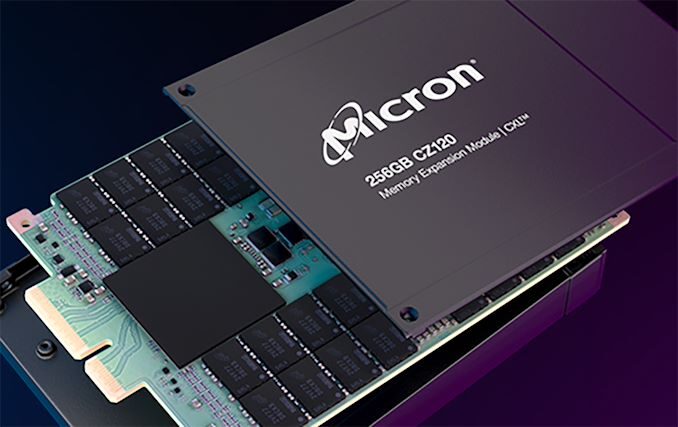
Compute Express Link, or CXL, is an open interconnect standard that allows CPUs, accelerators, memory expansion devices, and switches to communicate more coherently over a PCIe-based link. A CXL memory device expands server memory beyond what is practical through conventional DIMM slots alone.
The point is not simply to attach external memory. CXL is designed for memory expansion, memory sharing, and memory pooling. In cloud environments, some servers often have stranded memory while others are memory constrained. That mismatch matters. A pooled architecture can lower total cost of ownership if memory can be assigned where it is needed instead of being overprovisioned server by server.
2026 Update: The Standard Is Moving Toward CXL 4.0, Products Are Still Mostly CXL 2.0
The most important update is that the standard roadmap and the product cycle are moving at different speeds. The CXL Consortium is offering access to an evaluation copy of the CXL 4.0 specification in 2026. That signals continued progress toward larger fabrics, lower latency, and broader scalability.
Commercial products and customer validation, however, remain mostly centered on CXL 1.1 and CXL 2.0. Astera Labs’ Leo CXL Smart Memory Controller targets memory expansion and pooling, and its A-Series hardware points to configurations with up to four DDR5 RDIMMs and up to 2TB. Marvell’s Structera portfolio also targets CXL 2.0 memory expansion controllers, near-memory accelerators, and CXL switches.
| Area | 2023 View | 2026 View |
|---|---|---|
| Core question | What is CXL? | Which workloads can monetize CXL first? |
| Standard | Expectation around CXL 2.0/3.0 | CXL 4.0 evaluation specification, products still mainly CXL 2.0 |
| Demand driver | Server memory expansion | AI inference, recommendation, databases, cloud memory efficiency |
| Commercial status | Early samples and proof-of-concept work | Expanding controller, add-in card, and switch ecosystem |
CXL Memory and HBM Are Not Direct Competitors
HBM remains the most visible memory technology in AI semiconductors. HBM provides very high bandwidth next to GPUs and AI accelerators. CXL memory usually addresses a different layer: CPU-side and system-level capacity, flexibility, and memory pooling. The two technologies solve different bottlenecks.
In large AI infrastructure, GPUs are central to training and high-performance inference. But CPUs and system memory are still needed for data preparation, search, caching, orchestration, post-processing, and state management for agentic workloads. CXL makes that CPU-side memory layer larger and more flexible.
Which Companies and Components Matter
The CXL ecosystem is not only a DRAM vendor story. Memory modules, controllers, retimers, switches, firmware, and system software all need to work together. Samsung Electronics and SK hynix remain natural beneficiaries if CXL memory modules scale, because CXL increases the addressable use cases for high-capacity DDR5-based memory. But the actual adoption curve will depend heavily on controller availability, server platform validation, and cloud software readiness.
On the controller side, companies such as Astera Labs and Marvell are productizing CXL memory expansion and pooling. Astera Labs positions Leo around reducing memory bottlenecks in AI and cloud infrastructure. Marvell’s Structera A, X, and S families address near-memory acceleration, memory expansion, and CXL switching.
Investment Implications: CXL Is a Long-Term Infrastructure Shift
CXL memory should not be treated as a technology that immediately transforms the server DRAM market. There are three reasons. First, cloud providers require long validation cycles before adopting a new memory tier. Second, CXL latency and bandwidth characteristics are not ideal for every workload. Third, GPU and HBM investment still dominates near-term AI infrastructure budgets.
Still, the long-term implication is important. As AI infrastructure expands from training into inference, search, and agentic services, server-wide memory efficiency becomes more valuable. If CXL succeeds, DRAM vendors gain a new high-capacity module opportunity, controller vendors gain a higher-value system semiconductor market, and cloud operators gain a way to reduce stranded memory and improve server utilization.
Key Risks
- Adoption speed: CXL depends more on server validation and software readiness than on the published standard alone.
- Economics: Adoption may be delayed if the cost of CXL devices and switches exceeds the memory savings.
- Workload fit: Ultra-low-latency workloads may still prefer local DRAM or HBM.
- Competing approaches: GPU memory, NVLink-style fabrics, and high-speed Ethernet-based distributed memory approaches can absorb part of the demand.
Conclusion: CXL Memory Is Moving From Standard Candidate to Commercial Validation
CXL memory remains a serious candidate for the next standard in server memory expansion. The 2026 conclusion, however, needs to be realistic. CXL does not replace HBM. It improves the memory capacity, sharing, and pooling layer around CPUs and cloud servers, which can raise the overall efficiency of AI infrastructure.
From an investment perspective, the near-term issue is not headline excitement but ecosystem formation. The indicators to watch are CXL controller production, server OEM qualification, real cloud deployments, and whether CXL memory modules can earn a premium over conventional DDR5 server DRAM.
Related Topics
- Samsung PM1763 PCIe 6.0 Enterprise SSD: The Storage Layer Behind the Next AI Wave
- AI server memory hierarchy: HBM, DDR5, CXL, and SSD roles
- How memory pooling can change cloud data center cost structures
Sources
- CXL Consortium – CXL Specification
- Astera Labs – Leo CXL Smart Memory Controllers
- Marvell – CXL near-memory accelerators and memory-expansion controllers
- Micron – Memory portfolio
Language versions:
한국어 원문 |
English version